
.webp)
6 Ways to Avoid Headaches That Can Help You Manage Too Many Slack Channels
- Nimbus Expert

- Jan 6
- 5 min read
Updated: Jan 13
Slack is a well-recognized communication tool, and the addition of several new functionalities in recent years cemented its place as a collaboration hub for companies of all industries and sizes. Salesforce acquired Slack Slack back in 2021, and since then, the integration between platforms has seen vast improvements, with Salesforce Channels being the latest addition for all Slack plans.
As the flagship Slack feature all users know and leverage every day, juggling various channels is a part of every user's journey with Slack. Let's dive into a few ways you and your users can efficiently manage Slack channels.
Slack Channels
To begin with, what are Slack channels? In essence, they are a method for uniting multiple users to collaborate, exchange information, and have a designated area for real-time communication. You can create two primary types of channels:

Public channels: Where members of your workspace can find, read through, and join.
Private channels: An invite-only channel. It can’t be found by other users when searching for it.
Given the numerous topics and projects employees may need to address, it's no wonder that the number of Slack channels can quickly grow.
Ways to Manage Slack Channels
Ideally, each Slack user should regularly propose collaborative guidelines and methods for managing channels over time that best fit your company.
For now, if you're seeking ways to optimize Slack, here are six suggestions you can implement today.
1. Exit Inactive Channels
An underrated feature of Slack is the ability to swiftly exit channels you no longer require.
Located under the "Manage" option for channels, this feature allows Slack users to review their inactive channels and leave them all at once—or deselect the ones they wish to remain in. With just a few clicks, everyone can declutter and reclaim time for more important tasks.

2. Organize Channels into Sections
Slack provides the flexible feature of creating sections to customize your experience, available on all paid plans.
Users can organize their channels by departments, topics, or any other relevant categories. This feature helps your team prioritize the channels they need to access first and view others only as necessary.
Sections can contain both channels and direct messages. Once a section is set up, channels or direct conversations can be easily dragged and dropped into it.

In addition to organizing the sidebar into sections, your team can enhance knowledge sharing by utilizing Slack Canvas.
Each channel can host multiple canvases displayed as tabs, serving as a resource that your team can update continuously. Various templates are available for exploration, and the document can include embedded images and threads, with version history available to track changes.
This reduces the necessity to upload a project update directly to your channel, as any new note will be automatically posted to the channel upon updating, with all assigned users being notified.

3. Fix Your Notification Settings
Channels can oftentimes get busy, leaving you inundated with notifications. Many of these messages may not be relevant to you, but leaving said channel is not an option you have.
This is where tailored notifications come into play!
For each channel you’re a member of, you can edit the notifications behavior and choose from a few options, such as:
Mute channel: Looking for an in-between of just mentions and no notifications? If you are part of numerous channels that you may still need from time to time, muting a channel will pop a notification when you are directly tagged and also display a badge next to the channel.
Just mentions: You will only be notified about messages relevant to the entire channel, or messages where you are directly tagged in. This option is useful for channels you may need to be sporadically informed on.
All new posts: Receive notifications for all new messages within the channel and threads you are following. This setting will come in handy for channels you are actively monitoring and need real-time updates from.
Nothing: Allows you to turn off all push notifications for a given channel. This should be used only for those channels you proactively visit when needed.

There are a few additional notification settings to explore on top of these main ones, so be sure to take a look and tailor them appropriately, for both channels as well as direct messages and the mobile experience.
4. Enable Futured Workflows
If you have been managing Slack for some time, you are likely acquainted with workflows, and so might your users. Slack workflows are a no-code automation feature available on Slack's paid plans. These workflows assist you and your team in automating a wide range of tasks, from simple activities to more complex integrations.
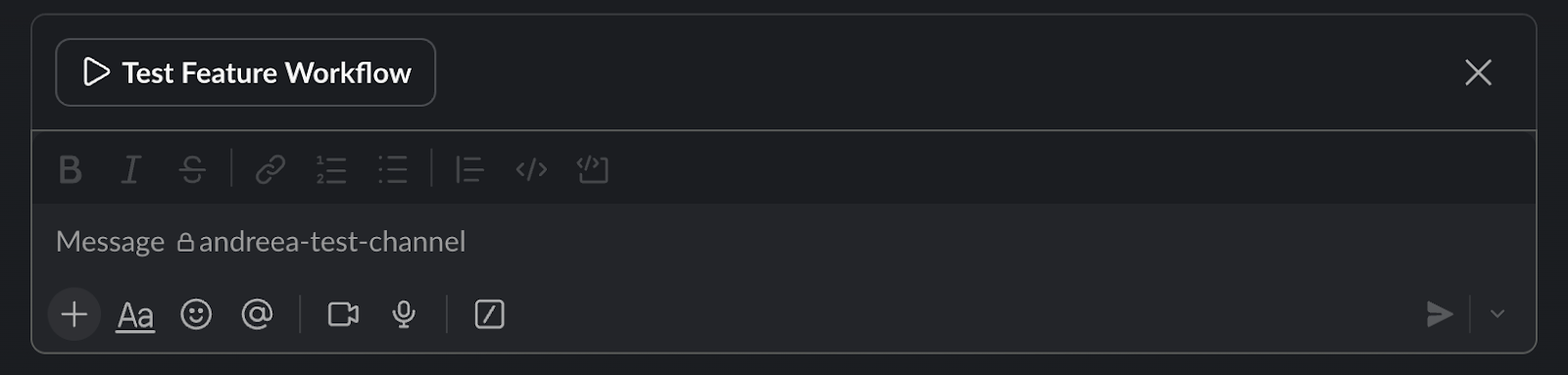
Workflows can be initiated in several ways, but when it comes to channels, there is an option that can highlight the workflow prominently. While it may seem intrusive, the intention of highlighting a Workflow is precisely to discourage users from posting in a channel and instead use a designated workflow featured on the channel.
This can be done from the Workflows tab on a channel. You can select up to fifteen published workflows to be displayed as buttons when users intend to start writing.
Therefore, if you need a formalized method to capture requests or bugs—from channels into the dedicated platforms, for instance—it might be worth trying this approach.


5. Get up to Speed with Slack AI
Artificial intelligence is evolving at record speed, and there’s no denying that it can be a significant productivity boost when used purposefully. Slack AI aims to transform the way teams collaborate and work through various features, including AI agents. But there’s one feature which cannot go unmentioned when it comes to Slack channels – the built-in AI recap.
Included starting with the Business+ plan, the AI daily recaps can change the way your team keeps track of what happened across multiple channels in no time.
There’s no need to open and scroll through all of them, as this feature only requires selecting the channels you need a recap on. Then you can sit back and watch the information unfold. If you already have a Business+ or Enterprise+ subscription with Slack, take the AI recap for a spin.

6. Salesforce Channels
Last but not least is the new Salesforce Channels. Available for all Salesforce customers, even when using the free plan of Slack, these channels can transform the way your team collaborates when it comes to specific Salesforce records, such as customer Accounts or Opportunities.
These types of channels can easily be created directly from Record Pages in Salesforce, as long as the object was enabled and the Slack component was added to the Record Page. With the Winter ‘26 Salesforce release, writing a message in the chat window on the record will automatically create the Salesforce Channel, but the option to link an existing one remains.

On the Slack side, your team can review record details and make changes as needed – from using quick actions and updating record fields, to even creating related records without having to navigate to Salesforce.
Also, keep in mind that the channel’s access can always be set to limited, ensuring that users who only have record access in Salesforce can view and join the channel moving forward.
Summary
Regardless of how many Slack channels you and your users are part of, there is at least one way to make the experience better and collaboration smoother. From tweaking the notification settings and leaving channels you haven’t visited in a while, to adding relevant resources in a Canvas, there are plenty of options to pick from.
How are you making use of channels in Slack? Let us know in the comment section below!


Comments